A complete boutique interior design guide covering layout, display strategy, lighting, fitting rooms and brand storytelling. Learn how considered design increases conversion rate and average basket value in fashion retail. Discover how we design and deliver boutique fit outs in Islamabad and across Pakistan.
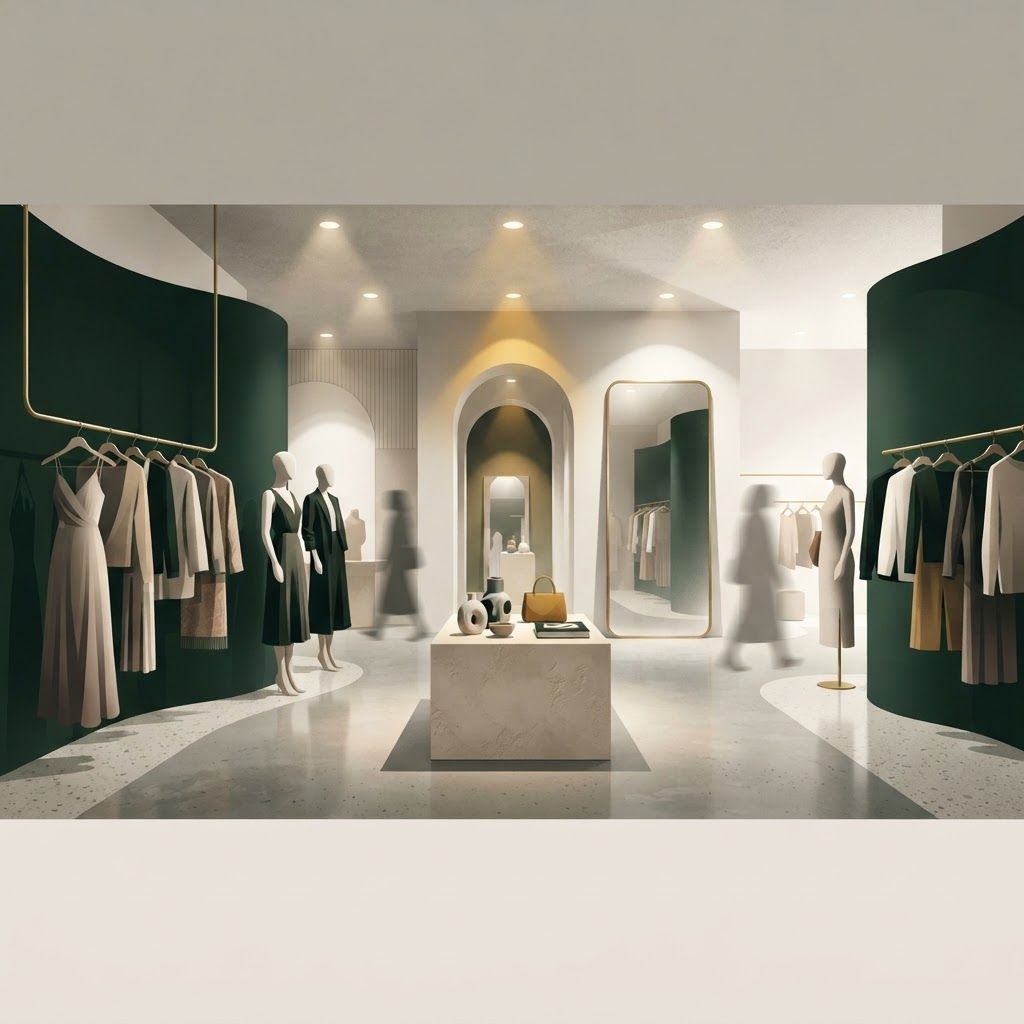
The difference between a shop and a boutique is intention. A boutique presents a carefully edited selection of products in a space designed to make each item feel considered and desirable. In Pakistan's fashion, jewellery, lawn, prêt and bridal markets, where competition is fierce and customers move quickly between physical stores and online catalogues, interior design is one of the few defensible advantages a small retailer has. A well designed boutique slows the customer down, guides them along a deliberate journey, makes trying easy and turns browsing into buying. A poorly designed one hides its best products behind clutter and pushes shoppers back onto their phones.
At Living Solutions Global we approach boutique interiors as commercial instruments. Our Interior Design and Fit Out division studies your product mix, price positioning, target customer and stock volume before drawing a single wall, then develops layout, display systems, lighting, joinery, fitting rooms and finishes into a complete package that our site team delivers. We work extensively with independent designers, multi brand retailers and growing labels in Islamabad and across Pakistan, and we understand how to balance a strong visual identity against realistic budgets and local fabrication capability. Our commercial interior design team can take your boutique from concept to opening day with one point of accountability.
Every boutique has a predictable rhythm: the customer notices the storefront, crosses the threshold, pauses, moves along a path, discovers products, touches items, tries them, decides and pays. Design should support each of those steps. Immediately inside the entrance, leave a decompression zone of roughly one to two metres where nothing is sold. Shoppers entering a space need a moment to adjust before they can absorb merchandise, and displays placed too close to the door are consistently overlooked. Beyond that zone, place a strong visual anchor to pull the customer inward, then arrange the route so they naturally pass your highest margin and newest collections.
Boutique layouts generally follow one of a few proven patterns. A free flow layout with islands and perimeter hanging suits fashion and encourages exploration, ideal for smaller curated collections. A loop or racetrack layout guides customers past the full range, working well in larger stores. A grid layout maximises stock density but feels functional rather than aspirational, so it suits value driven retail more than premium labels. A diagonal or herringbone arrangement of fixtures creates longer sight lines and a sense of movement in narrow spaces. Whichever pattern you choose, maintain clear aisles of at least one hundred and ten centimetres and wider main routes where customers carry garments or push prams.
Retail display works in vertical bands. The band between roughly one hundred and twenty and one hundred and sixty centimetres from the floor is prime selling height where the eye rests naturally, so it should hold your key pieces. Below that, place folded stock and volume items. Above it, use display and storytelling rather than reachable merchandise. Vary presentation deliberately: face out hanging for hero garments, side hanging for range depth, folded stacks on tables for texture, mannequins for styling ideas, and plinths for accessories and jewellery. Resist the temptation to fill every gap. Negative space signals quality, and reducing density on a wall almost always increases attention on what remains.
Nothing changes a garment more than light. Aim for a layered scheme. Ambient lighting provides an even base of around three hundred to five hundred lux for general circulation. Accent lighting, typically adjustable track spots, delivers two to three times the ambient level onto feature displays, mannequins and hero walls, creating the contrast that draws the eye. Vertical illumination on hanging walls ensures fabric reads clearly rather than falling into shadow. Choose a high colour rendering index so colours, especially the reds, golds and jewel tones common in Pakistani fashion, appear true. Keep colour temperature consistent throughout the store, generally three thousand kelvin for warm luxury or three thousand five hundred to four thousand kelvin for a crisp contemporary feel. Mixing temperatures makes stock look mismatched and cheap.
The fitting room is where the purchase decision is genuinely made, yet it is routinely treated as an afterthought. Make cubicles generous, ideally at least one hundred and twenty by one hundred and fifty centimetres, with wider accessible options. Provide a bench or stool, several hooks at different heights, a full length mirror set slightly back and angled, and a place to set a handbag. Light the customer, not the ceiling above them: soft vertical light from both sides of the mirror at flattering warm colour temperature avoids the harsh downlight shadows that ruin confidence. Ensure genuine privacy through solid doors or heavy curtains with proper overlap, sound separation and lockable latches. Add a discreet call point so staff can bring another size without the customer leaving the room. Comfortable, private, well lit fitting rooms measurably raise conversion.
Boutique fixtures need to move. Collections change, seasons rotate and campaigns require new arrangements, so build flexibility into the system with slotted or channel wall systems, adjustable shelf brackets, movable islands on concealed castors and modular plinths. For finishes, combine a calm background with tactile highlights: micro cement or large format porcelain floors, plastered or fabric wrapped walls, timber and brass detailing, fluted panelling, stone counters and generous mirrors. Choose durable surfaces at contact points such as door edges, counters and cash desk fronts. Locally fabricated joinery in Pakistan can achieve excellent quality when the drawings are detailed and site supervision is consistent, which is where an experienced fit out partner earns its fee. Our fit out services cover shop drawings, procurement, workshop inspection and installation.
A large share of boutique retail in Pakistan serves women, and many boutiques are owned and operated by women. Design should reflect that reality with care: comfortable and private fitting areas, secure and well lit entrances, seating for companions, prayer and washroom provision where possible, stroller friendly aisles and staff areas that feel safe and dignified. Some clients specifically prefer to work with a female interior designer in Islamabad for sensitive spaces, women only salons or family focused briefs, and we are able to arrange this so consultations, site visits and measurements feel entirely comfortable for you and your customers.
The window is your most valuable advertising space. Keep it simple with one clear message per campaign, strong lighting that beats daylight reflection during the day and remains attractive at night, and a background treatment that decides whether the interior is visible or the display is framed. Signage should be legible from across the road and at a walking glance, positioned at a consistent height with clean illumination. Maintain a clear, unobstructed threshold, because even a small step or a heavy door can reduce entries meaningfully.
Position the cash desk where staff can see the entrance and most of the floor without dominating the customer journey, typically along a side wall towards the rear. Provide enough counter length for packaging, a stool for long shifts, cable management for terminals and lockable storage. Plan back of house properly: a stock room with adjustable shelving and hanging rails, a steamer point, a small desk for administration and a staff washroom. Retailers who skip stock room planning end up storing boxes on the sales floor, which quickly erodes the boutique feel. Add discreet security measures such as camera coverage, tagging points and controlled fitting room access without making the space feel policed.
Allocate your budget in order of commercial impact: lighting, fitting rooms, flexible fixtures, flooring, then decorative extras. The most frequent mistakes we correct are overstuffed floors, insufficient lighting contrast, undersized fitting rooms, fixtures that cannot be reconfigured, no stock storage and a signage plan added at the last minute. Build a realistic programme covering survey, concept, detailed design, procurement, construction and snagging, and protect a contingency for site conditions in older buildings. Finally, connect the physical store to your digital presence: consistent photography, clear location and hours online and an active content plan supported by digital marketing in Pakistan ensure the traffic your beautiful boutique deserves actually arrives.
A boutique interior should make your product look its best, make your customer feel confident and make your team's work easier. When layout, lighting, display and fitting rooms are designed together, the sales floor starts working for you every hour it is open. Contact our team to discuss your space, your collection and your ambitions, and we will develop a scheme that reflects both.

Written by the Living Solutions team
Strategy, design, and trade expertise, all under one roof.
Let's discuss how we can turn your vision into sustainable growth and measurable success.