Smart home technology works best when it is planned into the interior design rather than added afterwards. This guide covers lighting control, climate management, security, load shedding resilience and concealed integration for Pakistani homes. It also explains which systems justify the investment.
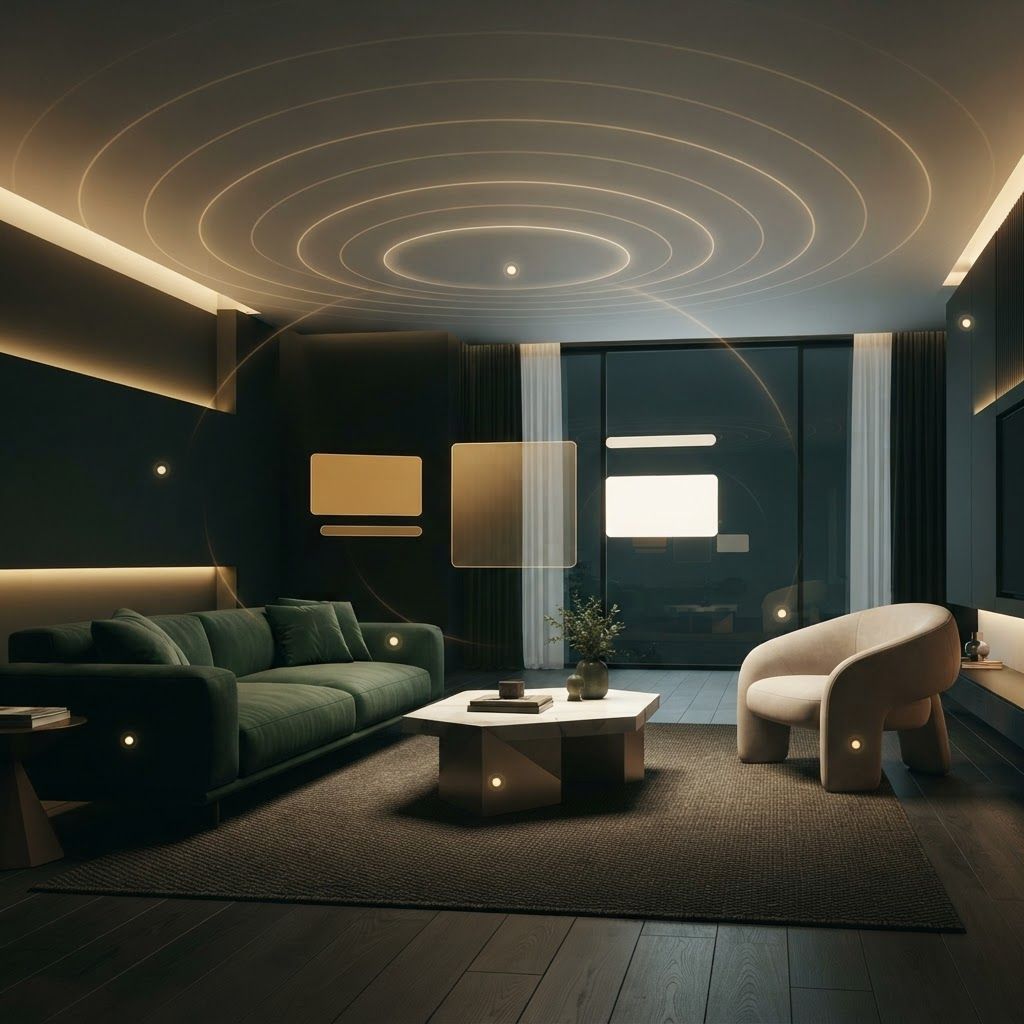
Smart home technology has moved from novelty to genuine utility, particularly in Pakistan where power interruption, security concerns and extreme summer temperatures create real problems that automation can solve. The difficulty is that most smart installations happen backwards. Devices are purchased first, then someone tries to hide the wiring and reconcile the app. Planned properly during the interior design stage, the same technology disappears into the architecture and simply works.
At Living Solutions Global we treat automation as part of the electrical and joinery design rather than a separate purchase. Our Interior Design and Fit Out division plans cable routes, control positions, equipment housing and power backup provision while the drawings are still on paper, which is when it costs almost nothing. The result is a home where technology is invisible until you need it. Learn how we build this thinking into our interior design in Pakistan projects across Islamabad and beyond.
The single most valuable smart home decision has nothing to do with brands. It is providing the infrastructure that lets you add or upgrade devices for the next fifteen years without breaking a wall.
That means running data cabling to key locations even if you intend to use wireless devices, because wired connections remain more reliable for cameras, access points and control panels. It means providing a small ventilated cupboard or cabinet to house the router, switch, network video recorder and control equipment, rather than leaving them stacked on a shelf. It means neutral wires at switch positions so smart switches can be fitted later. And it means conduit with pull cords to positions you might use in future.
None of this is glamorous and all of it is cheap during a fit out. Retrofitting any of it afterwards is disruptive and expensive.
If you invest in only one system, choose lighting. It affects how every room feels at every hour and it is the automation people actually use daily.
Design circuits in layers so ambient, task and accent lighting can be controlled separately. Add dimming to living areas and bedrooms so the same space serves both bright activity and evening calm. Programme simple scenes such as arrival, dining, film and night, so a single action sets an entire room correctly.
Practical Pakistani applications matter here too. Motion sensing in corridors, staircases, storerooms and bathrooms prevents lights being left on. Automatic pathway lighting at low level makes night movement safe without waking anyone. Exterior lighting on timers improves security while keeping consumption sensible.
Cooling is the largest energy expense in most Pakistani homes, which makes it the most rewarding target for intelligent control.
Zoned climate control allows you to cool occupied rooms only, rather than treating the whole floor identically. Scheduling brings bedrooms to a comfortable temperature shortly before bedtime instead of running all evening. Occupancy sensing prevents air conditioning running in empty rooms, which is remarkably common in family homes. Integration with window treatment, so blinds close automatically during peak afternoon sun, reduces load before cooling even begins.
Remote control has practical value beyond convenience. Being able to switch off cooling you forgot about, or start it thirty minutes before returning home, changes both comfort and cost.
Security is often the reason Pakistani clients first consider automation, and the technology has become genuinely capable.
Plan camera positions during design so cabling is concealed and coverage is sensible, with attention to entry points, boundary walls, parking areas and the main gate. Provide for a video door station at the gate linked to indoor panels and to phones, which is particularly useful in larger houses where reaching the gate takes time.
Smart locks on the main door remove the key management problem for families with staff and visitors, and allow temporary access to be granted and revoked. Door, window and motion sensors integrated with lighting create effective deterrence, because a house that responds to movement reads as occupied.
One caution. Any security system dependent on internet connectivity needs local recording and local operation as a fallback, because connectivity here cannot be assumed.
This is where international smart home advice fails Pakistani homes. A system that resets every time power switches to backup is worse than no system at all.
Plan the electrical distribution so essential circuits, including the network equipment, security system, selected lighting and refrigeration, sit on backed up supply. Provide uninterruptible power for the router and control hub so the network stays alive during switchover. Design the electrical layout to accommodate an inverter or solar arrangement, with adequate space, ventilation and cable routing for batteries.
Doing this at the design stage costs a fraction of retrofitting it, and it is the difference between technology that impresses visitors and technology that serves the household reliably.
Technology should be felt, not seen. That is achieved through joinery detailing rather than gadgets.
Recess screens into wall panelling with cable routes concealed behind. Design cove details that hide linear lighting completely so you see illumination and never the fixture. Integrate speakers into ceilings flush with the plaster. Build charging provision into bedside cabinets, desks and kitchen drawers so cables never appear on surfaces. Allow ventilated cavities for equipment that generates heat, because a hidden device that overheats fails early.
Keep control interfaces logical. Position panels at natural decision points such as the entry, the bedside and the main living area. Retain physical switches everywhere, because a guest, an elderly parent or a child should be able to turn on a light without an application.
The same logic scales up. Occupancy based lighting and cooling reduce operating cost significantly in offices where areas sit empty for much of the day. Meeting room booking displays, integrated conferencing and access control improve daily function. Energy monitoring shows precisely where consumption occurs, which is the first step to reducing it. We plan these systems as part of our office interior design scope rather than leaving them to a separate vendor after handover.
Invest in infrastructure, lighting control, climate zoning, security and power resilience. These are used constantly and they repay their cost in comfort, safety and bills.
Be sceptical of single purpose novelty devices, appliances whose intelligence depends on a manufacturer's cloud service continuing to exist, and any system so complex that only one person in the household can operate it. Complexity is the enemy of adoption.
Above all, choose systems with local support. A sophisticated platform with no technician available in Islamabad is a liability, not an asset. This pragmatic approach guides the residential interior design recommendations we make to every client.
Smart home technology succeeds when it is designed alongside the walls, ceilings and cabinetry rather than negotiated afterwards. If you are planning a new home or a substantial renovation, talk to our team early. We will map out the infrastructure, recommend systems suited to Pakistani conditions and integrate everything so your home simply behaves the way you want it to.

Written by the Living Solutions team
Strategy, design, and trade expertise, all under one roof.
Let's discuss how we can turn your vision into sustainable growth and measurable success.