Choosing between a female and male interior designer is less about gender and more about fit, communication and the nature of your project. This balanced guide examines where each brings strengths in the Pakistani market. It also gives you a practical framework for selecting the right designer.
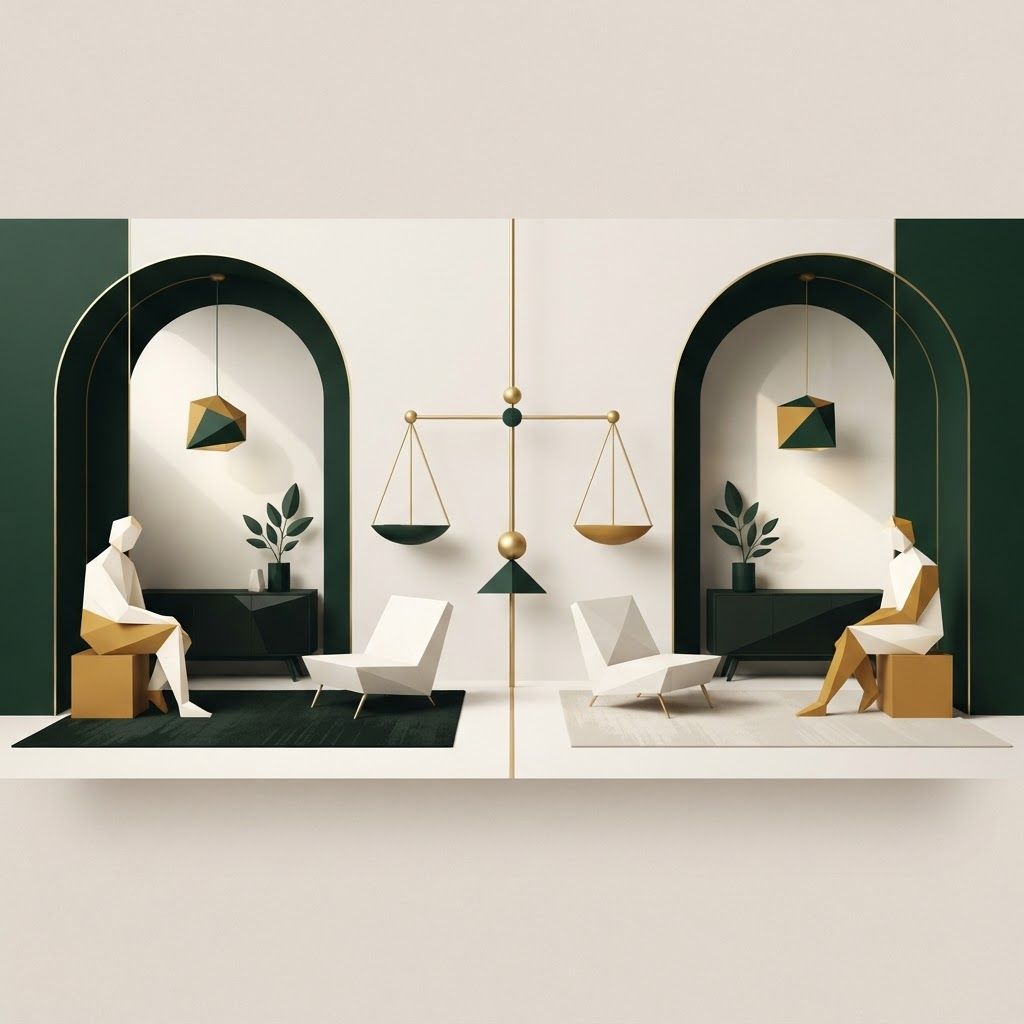
Homeowners in Pakistan often ask whether they should hire a female or a male interior designer. It is a fair question, and it deserves an honest answer rather than a marketing slogan. Talent is not determined by gender. There are outstanding designers of both genders working in Islamabad, Lahore and Karachi, and there are weak practitioners of both. What genuinely varies is fit. The nature of your project, the way your household operates, who will make the decisions and how much on site supervision is required all influence which designer will serve you best. Many families conclude that a female interior designer in Islamabad suits a private residence, while other projects are better matched to a different profile. This article explains the reasoning on both sides so you can decide with clarity.
At Living Solutions Global we run a full Interior Design and Fit Out division from Islamabad with both female and male senior designers on the team. When you brief us, we assign the design lead whose experience and working style genuinely match your project rather than whoever happens to be available. For a family residence where daily routines, storage and privacy dominate the brief, we usually place a female design lead who will work closely with the household. For a corporate headquarters, a retail unit or a hospitality space, we assign the specialist with the strongest track record in that building type. Our commercial interior design and interior design in Pakistan services both follow the same governance model, so whichever lead you work with you receive documented drawings, a transparent cost breakdown, procurement support and rigorous site supervision.
The most consistent advantage reported by Pakistani homeowners is communication inside the home. Residential design requires repeated access to private spaces. Bedrooms are measured, wardrobes are opened and kitchen habits are discussed at length. In many households the women are the primary users and decision makers for these areas, and conversations flow more freely when a woman is leading them. The practical outcome is a richer brief, because clients share the frustrations they would otherwise keep polite silence about.
The second advantage is functional insight into the parts of a home that are used most intensively. Kitchen ergonomics, laundry routes, pantry capacity, storage volume for seasonal items and the logistics of receiving guests are areas where lived experience produces better decisions. Female designers frequently ask the questions that prevent expensive mistakes, such as how many people cook at once, where dishes dry, and whether household help needs a separate work zone.
A third area is material and colour sensitivity. Much of the movement in Pakistan away from heavy gloss towards layered warmth has been driven by female designers who favour textured plaster, fluted timber, softly veined stone, natural fabrics and warm metallic accents. These palettes tend to age well and photograph beautifully without feeling cold.
It would be dishonest to present only one side. In the Pakistani construction environment, certain projects place heavy demands on site presence, contractor negotiation and technical coordination across long, unpredictable hours. Large scale commercial fit out, factory and warehouse conversions, structural alterations and projects in remote locations often involve extended time on active construction sites. Designers who have built long standing relationships with contractors, fabricators and suppliers in these environments can move a project faster and hold subcontractors to account effectively. In practice, many of these specialists in Pakistan are male, simply because of how the industry developed.
Some clients also work with male designers who have deep technical specialisation, for example in building services coordination, acoustic design, structural detailing or large format facade work. When a project is dominated by engineering complexity rather than domestic function, that specialisation may matter more than anything else.
If you set gender aside, the reliable predictors of a successful interior project are straightforward. First, a portfolio containing completed projects similar to yours, not only renderings. Second, the ability to explain a functional plan clearly, including circulation, storage and services, rather than presenting mood images alone. Third, transparent commercial documentation, with a line by line cost breakdown and a written scope. Fourth, a defined supervision commitment stating how often the designer will attend site and who signs off on materials. Fifth, references from clients who have lived in the space for at least a year.
A designer who satisfies all five criteria will serve you well regardless of gender. A designer who satisfies none will disappoint you regardless of gender.
For a private family home, particularly one where the brief is dominated by kitchens, wardrobes, children, elders and guest privacy, a female design lead is often the natural choice because the depth of dialogue with the household is decisive. For a boutique, salon, clinic, apartment or holiday home, the same logic frequently applies.
For a corporate office, the priority shifts to workplace planning, meeting room acoustics, cable management, compliance and staged handover, so the right lead is whoever has delivered comparable workplaces. For heavy fit out or structural work, the right lead is whoever has the strongest execution record with contractors. In each case, capability and relevant experience should decide.
In practice the strongest results usually come from a blended team rather than a single individual. Our own project structure reflects this. A design lead owns the concept and the client relationship, a technical coordinator manages drawings and services, and a site manager enforces quality and programme. Female and male professionals occupy these roles based on skill, and the client benefits from all of their perspectives.
This structure also protects you against the most common failure in Pakistani interior projects, which is a designer who produces beautiful visuals and then disappears during execution. Design and delivery need different strengths, and a team can supply both.
Ask to see two completed projects of similar scale and budget. Ask who will attend site and how often. Ask how variations are priced and approved. Ask what happens if a material is unavailable. Ask for the names of the joinery and finishing contractors who will execute the work. Ask how the design accommodates elders, children and storage. The quality of the answers will tell you more than any portfolio.
Do not choose a designer by gender alone, but do not dismiss the question either. For residential work in Islamabad and across Pakistan, the communication and functional advantages that female designers bring are real and frequently decisive. For complex commercial and structural work, relevant technical and site experience should lead. The best outcome is a team where the right professional owns the right responsibility.
If you would like help deciding, contact Living Solutions Global. We will review your property, discuss how your household or business operates and recommend the design lead who is genuinely the best fit for your project, then deliver it with documented quality from concept to completion.

Written by the Living Solutions team
Strategy, design, and trade expertise, all under one roof.
Let's discuss how we can turn your vision into sustainable growth and measurable success.