
Incoterms define who pays for what and who carries the risk in an international trade deal. This guide explains the most important terms in plain language for Pakistani exporters and importers.
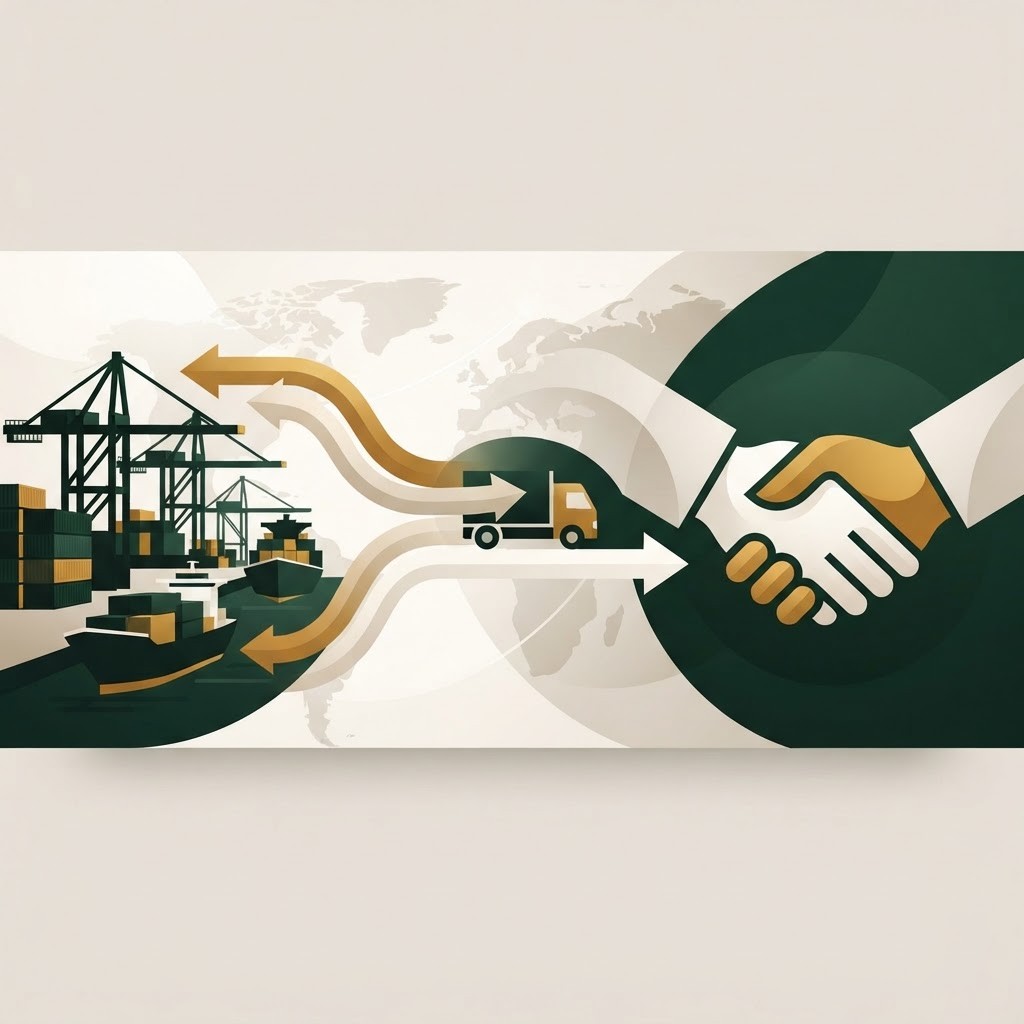
Every international sales contract depends on a shared understanding of responsibility. Who arranges transport, who pays the freight, who insures the goods, and at what point does risk pass from seller to buyer. Incoterms answer these questions. Published by the International Chamber of Commerce, these standard trade terms are recognised worldwide and remove the confusion that once caused disputes between trading partners. For Pakistani businesses selling to or buying from overseas markets, mastering Incoterms is one of the fastest ways to protect margins and avoid costly misunderstandings.
At Living Solutions Global we translate the fine print of trade terms into practical decisions that protect your business. Our Global Trade and Export team helps Pakistani companies choose the right Incoterm for each deal, negotiate fair contracts, and avoid hidden liabilities. Discover how Living Solutions Global and our export consultancy in Pakistan can strengthen your negotiating position on every order.
Incoterms are a common language for trade. When a buyer in Germany and a seller in Islamabad agree on a term, both parties know exactly where responsibility begins and ends. This clarity reduces disputes, speeds up negotiations, and makes pricing transparent. Without agreed terms, a shipment can stall while both sides argue over who should pay a customs charge or a handling fee. With the right term in place, everyone knows their duties before the goods ever leave the warehouse.
At one end of the spectrum sits Ex Works. Under this term the seller simply makes the goods available at their premises, and the buyer takes on almost every cost and risk from that point forward. This is the simplest arrangement for the seller but demands that the buyer manage export clearance, transport, and insurance. Free Carrier is a step further, where the seller delivers the goods to a named carrier or place and handles export formalities, after which responsibility shifts to the buyer.
Several terms were designed specifically for sea and inland waterway transport. Free On Board means the seller is responsible until the goods are loaded onto the vessel, after which the buyer carries the risk. Cost and Freight requires the seller to pay for carriage to the destination port, though risk still passes once the goods are on board. Cost, Insurance and Freight adds a requirement that the seller also arranges insurance for the voyage. These terms are widely used by Pakistani exporters of textiles, rice, and salt because so much cargo moves by sea.
At the other end of the range are terms that place the greatest burden on the seller. Delivered At Place means the seller carries the goods to an agreed destination and bears the risk until they are ready for unloading. Delivered Duty Paid goes furthest, requiring the seller to deliver the goods cleared for import, with all duties and taxes paid. While these terms are attractive to buyers, sellers must price them carefully because they absorb far more cost and risk.
The right Incoterm depends on your experience, your cash flow, and your appetite for risk. A new exporter may prefer terms that limit responsibility to the local port, while an established company seeking to win large buyers may offer delivered terms to stand out from competitors. Buyers who want maximum control over logistics often prefer terms that give them charge of transport. There is no single best term, only the best term for a particular deal and relationship.
Many disputes arise from small oversights. Always name the exact place or port alongside the term, because a term without a location is incomplete. Confirm who is responsible for insurance and at what level of cover. Check that the chosen term suits the transport mode, since some terms apply only to sea freight. Finally, make sure both parties reference the same version of the rules, so there is no ambiguity about which edition applies.
One of the most important lessons in trade terms is that cost and risk do not always transfer at the same point. Under some terms a seller pays for carriage to a distant port yet the risk passes much earlier, the moment the goods are loaded. Confusing these two concepts leads to disputes when goods are damaged in transit. Always be clear about who bears the cost of transport and who bears the risk of loss at every stage, because they are handled separately in the rules.
The term you choose has a direct effect on your working capital. Terms that require the seller to arrange and fund transport, insurance, and duties tie up cash for longer and demand stronger financial planning. Terms that pass responsibility early free up cash sooner but may make your offer less attractive to buyers. Balancing competitiveness against cash flow is a strategic decision that should reflect your financial strength and your growth goals.
An Incoterm is only useful if it is written clearly into the contract and every related document. The sales agreement, the invoice, and the shipping instructions should all reference the same term and the same named place. Consistency across documents prevents confusion and gives banks confidence when they process payment instruments such as letters of credit. A well documented term is your protection if a dispute ever reaches arbitration.
When used well, Incoterms become a competitive tool rather than a technical formality. They let you quote precise prices, manage risk deliberately, and build trust with international partners. Pakistani businesses that understand these terms can negotiate from a position of strength and expand into new markets with confidence. With expert support for import consultancy and international trade in Pakistan, you can turn every contract into a clear, profitable agreement.

Written by the Living Solutions team
Strategy, design, and trade expertise, all under one roof.
Let's discuss how we can turn your vision into sustainable growth and measurable success.