
A clear guide to how letters of credit work, why they matter for exporters and importers, and how they protect both sides of an international deal. Learn the process, the documents involved, and how to avoid costly mistakes.
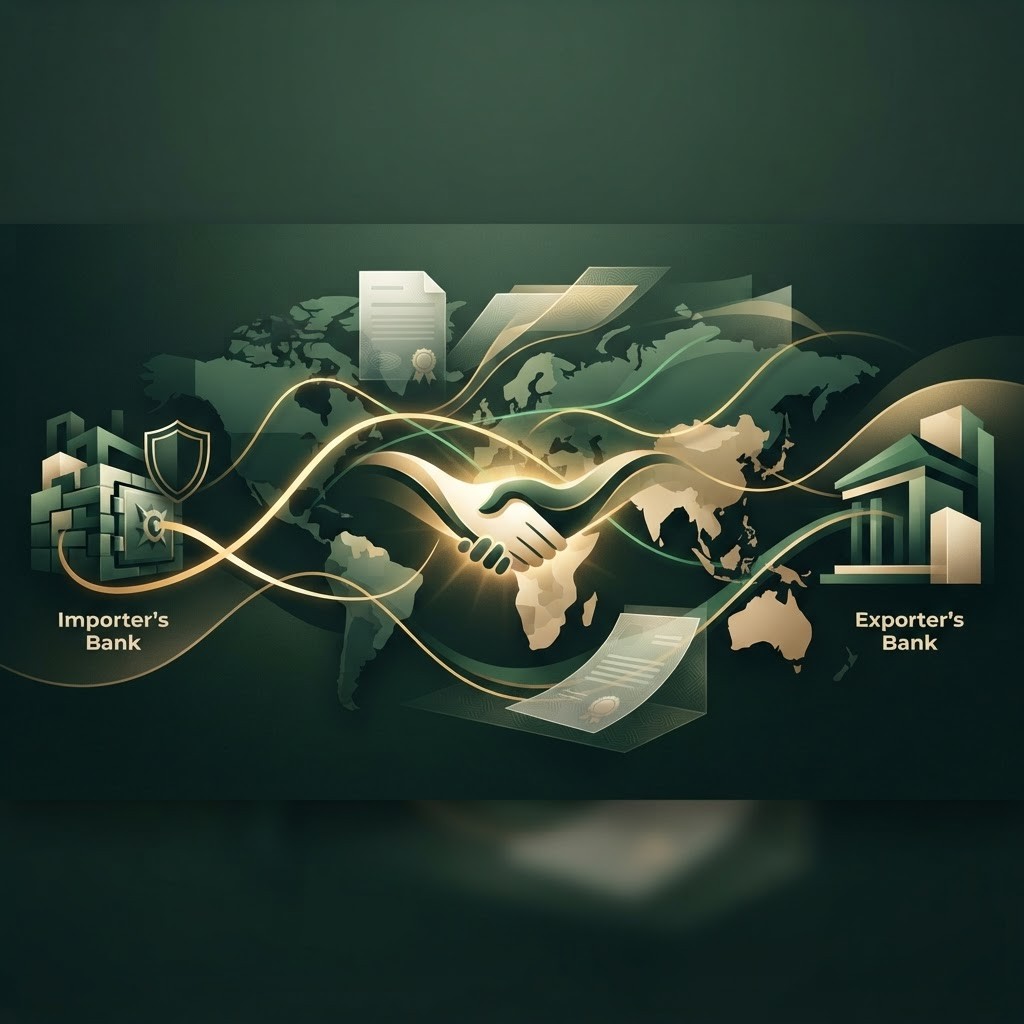
A letter of credit is one of the most trusted tools in international trade, giving both buyers and sellers the confidence to transact across long distances and unfamiliar markets. When a business in Pakistan sells goods to a buyer thousands of miles away, the biggest question is always the same: will payment actually arrive? A letter of credit answers that question by placing a bank in the middle of the deal, guaranteeing payment as long as the agreed conditions are met. For exporters building relationships with new international partners, this instrument removes much of the uncertainty that can otherwise stall promising deals.
At Living Solutions Global we help Pakistani exporters and importers structure their transactions so that letters of credit work smoothly from start to finish. As an Islamabad based consultancy with a dedicated Global Trade and Export division, we guide clients through documentation, bank coordination, and compliance so that payments are never delayed by avoidable errors. You can learn more about our approach at Living Solutions Global, where our team combines local market knowledge with global trade expertise. Our export consultancy in Pakistan is designed to make trade finance simple and secure for growing businesses.
A letter of credit is a written commitment issued by a bank on behalf of a buyer, promising to pay the seller a specified amount once certain documents are presented. These documents typically prove that the goods were shipped and that they match the terms of the agreement. Because the promise comes from a bank rather than the buyer alone, the seller can rely on the strength and reputation of a financial institution instead of the creditworthiness of a distant company. This is especially valuable when the two parties have never worked together before.
Several parties play a role in a typical letter of credit transaction. The applicant is the buyer who requests the letter of credit. The beneficiary is the seller who will receive payment. The issuing bank is the buyer bank that creates the letter of credit, and the advising bank is usually located in the seller country and confirms the authenticity of the document. In many deals a confirming bank adds its own guarantee, giving the exporter an extra layer of security. Understanding who does what helps businesses avoid confusion when questions arise during the shipment.
The process begins when the buyer and seller agree on terms and decide to use a letter of credit. The buyer then asks its bank to issue the document in favor of the seller. Once issued, the letter of credit travels to the advising bank, which notifies the seller. The seller ships the goods and gathers the required documents, such as the invoice, transport documents, and any certificates the buyer requested. These papers are presented to the bank, and if everything matches the agreed terms, payment is released. The strength of the system lies in its focus on documents rather than on the goods themselves, which means accuracy is everything.
There are several forms of letters of credit, each suited to different situations. An irrevocable letter of credit cannot be changed without the agreement of all parties, making it the most common and reliable choice. A confirmed letter of credit adds the guarantee of a second bank, which is useful when the seller has doubts about the issuing bank. A standby letter of credit acts as a backup that is only used if the buyer fails to pay through normal channels. Choosing the right type depends on the level of trust between the parties and the risks specific to each market.
The greatest risk in a letter of credit transaction is a mismatch between the documents and the terms. Even a small difference, such as a spelling variation or an incorrect date, can give the bank grounds to delay or refuse payment. This is why careful preparation is essential. Exporters must read the letter of credit closely, confirm that every requirement can be met, and prepare documents with precision. Working with experienced advisors reduces the chance of these errors and keeps cash flow steady, which is vital for businesses that depend on timely payments to fund their next production cycle.
Beyond securing individual deals, letters of credit open doors to new markets. Buyers in regions such as the Gulf, Europe, and East Asia often prefer or require this method, so being comfortable with it makes a Pakistani exporter far more attractive as a partner. Companies that master trade finance can pursue larger orders and enter markets that once seemed out of reach. For businesses exploring international trade in Pakistan, confidence in payment instruments is often the difference between a cautious first step and rapid expansion into several countries at once.
For any business preparing to trade across borders, the key is preparation. Understand the terms, agree on clear conditions with your buyer, and make sure your bank and your documents are aligned. With the right guidance, a letter of credit becomes not a source of stress but a foundation for growth. Our team helps clients move from their first tentative export to a steady stream of international orders, and our market entry services ensure that each new market is approached with a clear and practical strategy. When payment is secure, ambition can follow.

Written by the Living Solutions team
Strategy, design, and trade expertise, all under one roof.
Let's discuss how we can turn your vision into sustainable growth and measurable success.