Design a spa quality bathroom with confidence. This guide covers layout, waterproofing, stone selection, lighting, ventilation, storage and fittings for luxury bathrooms in Pakistan.
Bathrooms have quietly become the most ambitious rooms in modern homes. What was once a purely functional space is now expected to deliver the calm of a spa, the performance of a hotel and the durability of a wet room used twice a day for decades. In Pakistan this shift is very visible in new construction, where master suites in Islamabad, Lahore and Karachi routinely include freestanding tubs, walk in showers with rain heads, double vanities and full height stone. The appeal is easy to understand. A luxury bathroom is a small, contained space where a relatively modest budget can produce a dramatic transformation, and where you experience the result every single morning. But bathrooms are also the least forgiving rooms in a house. Water, heat, humidity and heavy daily use expose every shortcut. A bathroom that looks stunning on handover day but leaks into the ceiling below within two years was not luxurious, it was decorated. Real luxury here is built on waterproofing, ventilation, drainage falls and good ironmongery, all of which happen behind the beautiful surfaces.
At Living Solutions Global we design bathrooms from the substrate outwards. Our interior design in Pakistan team produces tiling layouts, stone slab drawings, fitting schedules and lighting plans, then coordinates plumbing routes, waterproofing details and extraction with the trades before anything is covered. Through our residential interior design service we make sure the bathroom relates properly to the bedroom and dressing area rather than feeling like a separate project. Our fit out services team executes the build with our own site supervision, testing waterproof membranes and drainage falls before finishes go down, because that is precisely where most bathroom failures originate. The outcome is a bathroom that looks like a magazine page and behaves like an engineered installation.
Plan the wet and dry zones before selecting a single tile. The best bathrooms separate the shower and toilet from the vanity and dressing area so one person can use the mirror while another showers. Allow a shower enclosure of at least thirty six by thirty six inches, and forty eight by thirty six for real comfort. Provide thirty inches of width per basin and thirty inches of clear space in front of the toilet. Position the toilet away from the direct line of sight from the door, and use a low wall or fluted glass screen if it must sit in view. Drainage governs everything: linear channel drains allow a single directional fall and larger tile formats, while central point drains require four way falls that break up big slabs. Confirm the position of soil stacks early, because moving a toilet more than a few feet is often the most expensive decision in the room.
This is the section most homeowners skip and every professional insists on. Apply a proper liquid or sheet waterproof membrane across the full shower floor and up the walls to at least seventy two inches, extending twelve inches beyond the enclosure, with reinforcing tape at all corners and junctions. Wet areas benefit from full room waterproofing. Falls should be around one in fifty to one in eighty toward the drain, verified with water before tiling. Use flexible tile adhesive and epoxy grout in showers, and silicone rather than grout at movement joints. Insist on a flood test of at least twenty four hours before finishes are laid. A bathroom that is watertight will still look excellent in fifteen years, which no amount of expensive marble can achieve on its own.
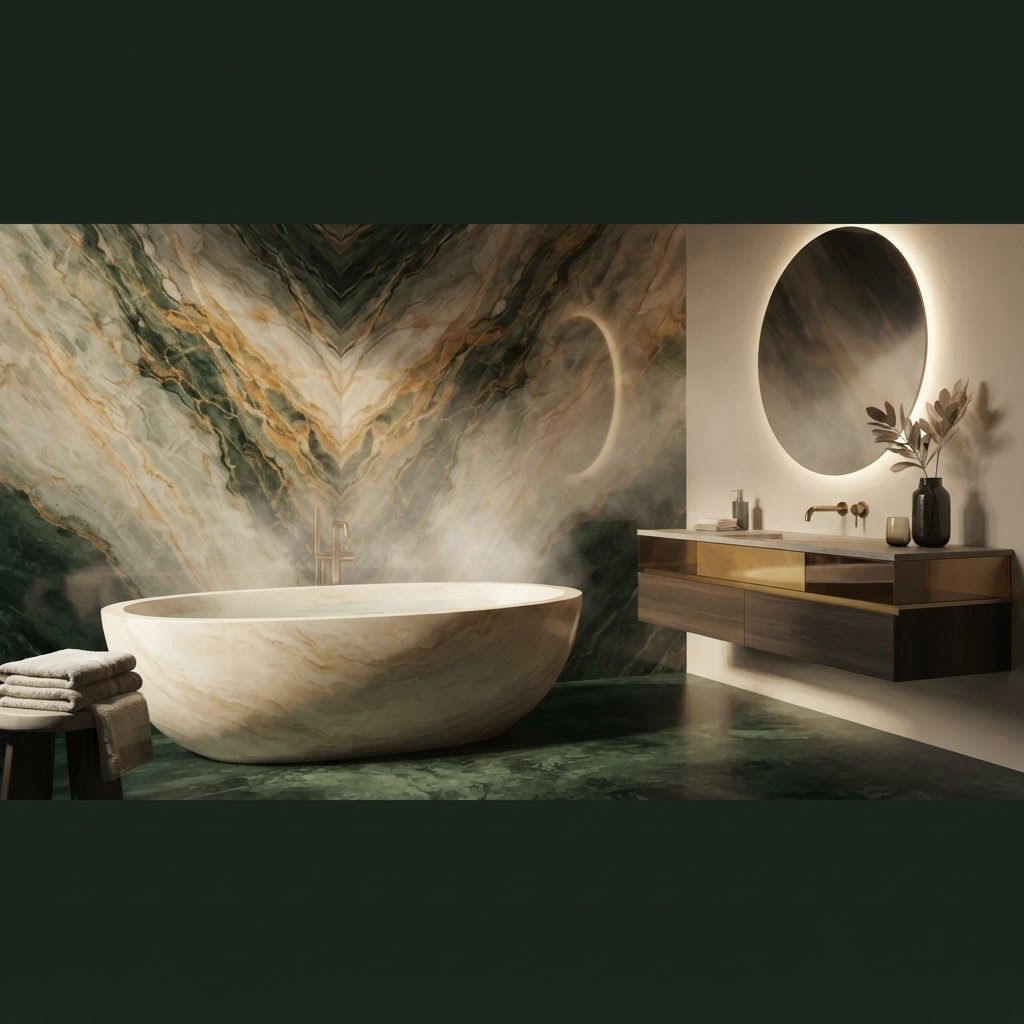
Stone gives a bathroom its sense of occasion. Book matched marble or onyx behind a freestanding tub, a single slab vanity top with a mitred edge, or full height porcelain slabs with dramatic veining all deliver a hotel quality effect. Be realistic about maintenance: natural marble is porous and will mark from cosmetics, hair products and hard water, so it needs periodic sealing. Large format porcelain and sintered stone replicate the look with far greater resilience and fewer grout lines, which also means easier cleaning. On floors, always check the slip rating and prefer a honed or textured finish over polished stone in showers. Keep the palette tight, typically one hero stone plus one quiet supporting material, and carry the veining direction through so joints read intentionally.
Bathroom lighting must do two contradictory jobs: give accurate light for grooming and create a soft, relaxing mood. Solve it with separate circuits. At the mirror, light the face from both sides at roughly eye level using vertical fittings or a backlit mirror, never from a single downlight overhead, which casts unflattering shadows. Provide general ceiling light with appropriate ingress protection ratings for wet zones. Then add atmosphere: a concealed strip under a floating vanity, a niche light in the shower recess, a waterproof cove above the bath. Dim everything and choose warm light around 2700 to 3000 kelvin with high colour rendering. Where possible, borrow daylight through obscured glazing or a high window, because natural light makes a bathroom feel twice its size.
Humidity is the enemy of every finish in the room and the primary cause of peeling paint, mouldy grout and swollen joinery. Specify mechanical extraction sized for the room volume, ducted directly outside rather than into a ceiling void, and ideally on a humidity sensor or a timer overrun so it continues running after use. Provide an air path, usually a gap under the door or a discreet grille. Use moisture resistant board and marine grade plywood for vanity carcasses, and finish all cut edges. In climates with long humid spells, an underfloor heating loop or a heated towel rail helps surfaces dry quickly, which does more for hygiene than any cleaning product.
Taps, showers and handles are the jewellery of the bathroom and the parts your hands meet daily. Choose solid brass bodies with quality ceramic cartridges over thin plated alternatives, because cheap brassware pits and drips within a couple of seasons. Brushed brass, aged bronze and matte black all suit warm luxury schemes, while polished chrome remains the easiest to maintain. Thermostatic shower valves are a genuine upgrade in areas with fluctuating pressure, protecting against sudden temperature changes. Check your incoming water pressure before specifying a large rain head, and add a pump if needed. Consider water hardness too, since scale ruins fittings and glass faster than any other factor. A muslim shower or health faucet should be planned as a designed element rather than an afterthought bolted beside the toilet.
Nothing undermines a luxury bathroom faster than bottles crowding the vanity. Plan storage precisely: drawers rather than doors under the basin, with cutouts around the trap so the space is usable, a mirrored cabinet with internal lighting for daily items, a tall unit for towels and refills, and recessed niches in the shower wall sized for actual bottle heights, ideally with a slight fall so water drains away. Include a hidden socket inside a drawer for razors and hairdryers, and a laundry hamper integrated into the joinery.
The last ten percent creates the spa feeling. Thick cotton towels in a single colour, a timber or stone bath stool, a large plant that thrives in humidity such as a peace lily or fern, and a linen roller blind soften the hard surfaces. Keep accessories minimal and matched to your metal finish. Add a full length mirror if space allows, and consider a discreet speaker for music. Small gestures, consistently executed, are what separate a hotel bathroom from an ordinary one.
A luxury bathroom is an engineering project wearing beautiful clothes. Resolve layout, drainage, waterproofing and ventilation first, then invest in one hero stone, layered lighting and quality brassware, and finish with storage that keeps every surface clear. Build it in that order and you will have a room that feels restorative every morning and still performs faultlessly a decade later.

Written by the Living Solutions team
Strategy, design, and trade expertise, all under one roof.
Let's discuss how we can turn your vision into sustainable growth and measurable success.