Explore the kitchen design trends transforming Pakistani homes, including handleless cabinetry, islands, stone surfaces, smart storage and ventilation solutions built for local cooking.
For generations the kitchen in a Pakistani home was a functional back room, closed off, poorly lit and rarely shown to guests. Today it is often the most expensive and most photographed room in a new house. Open plan living, the influence of returning overseas families, better local cabinet manufacturing and a wave of cooking content online have all pushed the kitchen to the front of the home and the front of the design brief. But there is a critical local reality that no imported catalogue accounts for: Pakistani cooking is heavy work. Deep frying, long simmering of curries, high heat tarka, atta and roti making, pressure cooking and the daily use of strong spices place demands on ventilation, surfaces and storage that a minimal European kitchen simply is not designed for. The best modern kitchens in Pakistan therefore look contemporary and calm while being engineered underneath for real cooking. That balance is where good design earns its money.
We approach kitchens as technical projects at Living Solutions Global, because a kitchen is a machine you have to live inside. Our interior design in Pakistan team plans the work triangle, appliance positions, extraction routes, socket locations and drainage before a single cabinet is drawn, then details every carcass, drawer and stone edge. Through our residential interior design service we match the kitchen to the wider home so it reads as part of the architecture rather than an add on. Families who prefer a female interior designer in Islamabad to survey and coordinate the kitchen with the women who cook in it daily can request one, and we find these conversations produce far better storage decisions. Our fit out services team then builds, installs and commissions the kitchen with our own supervision.
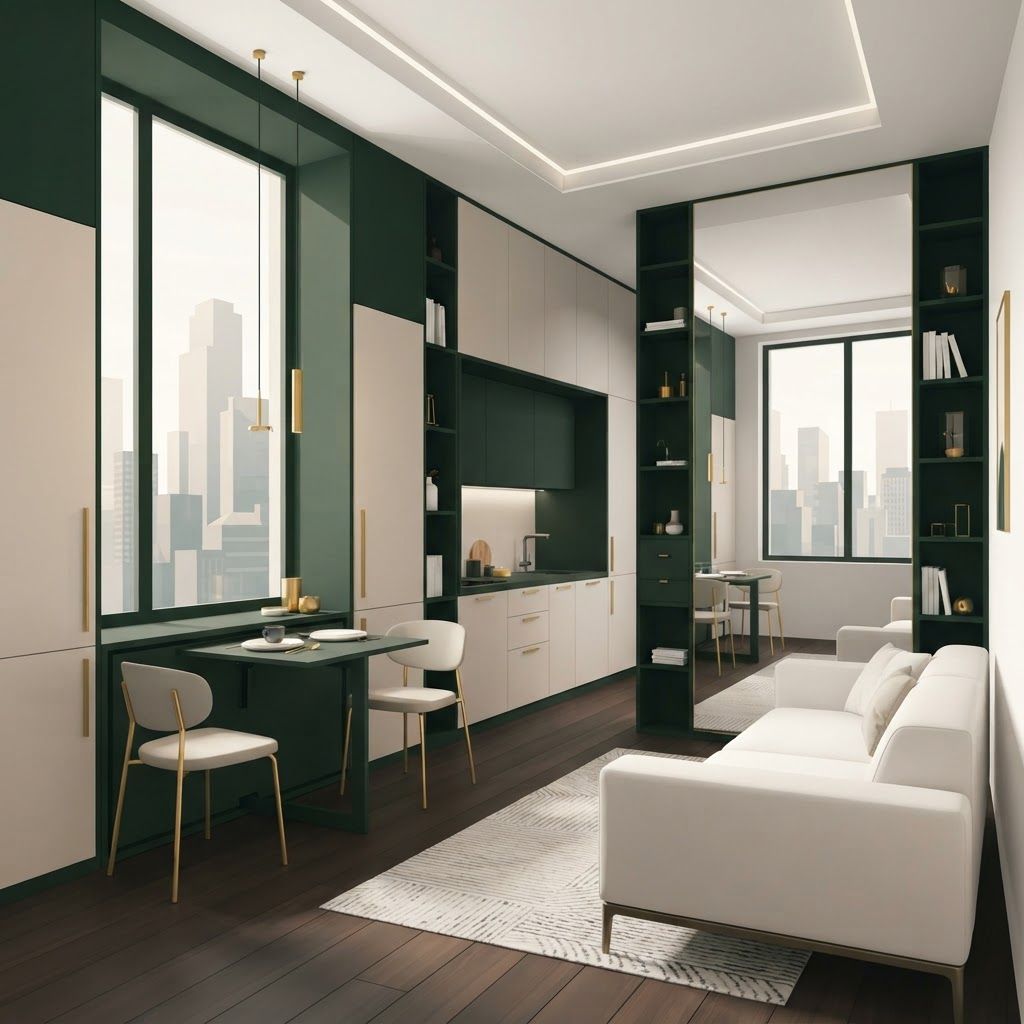
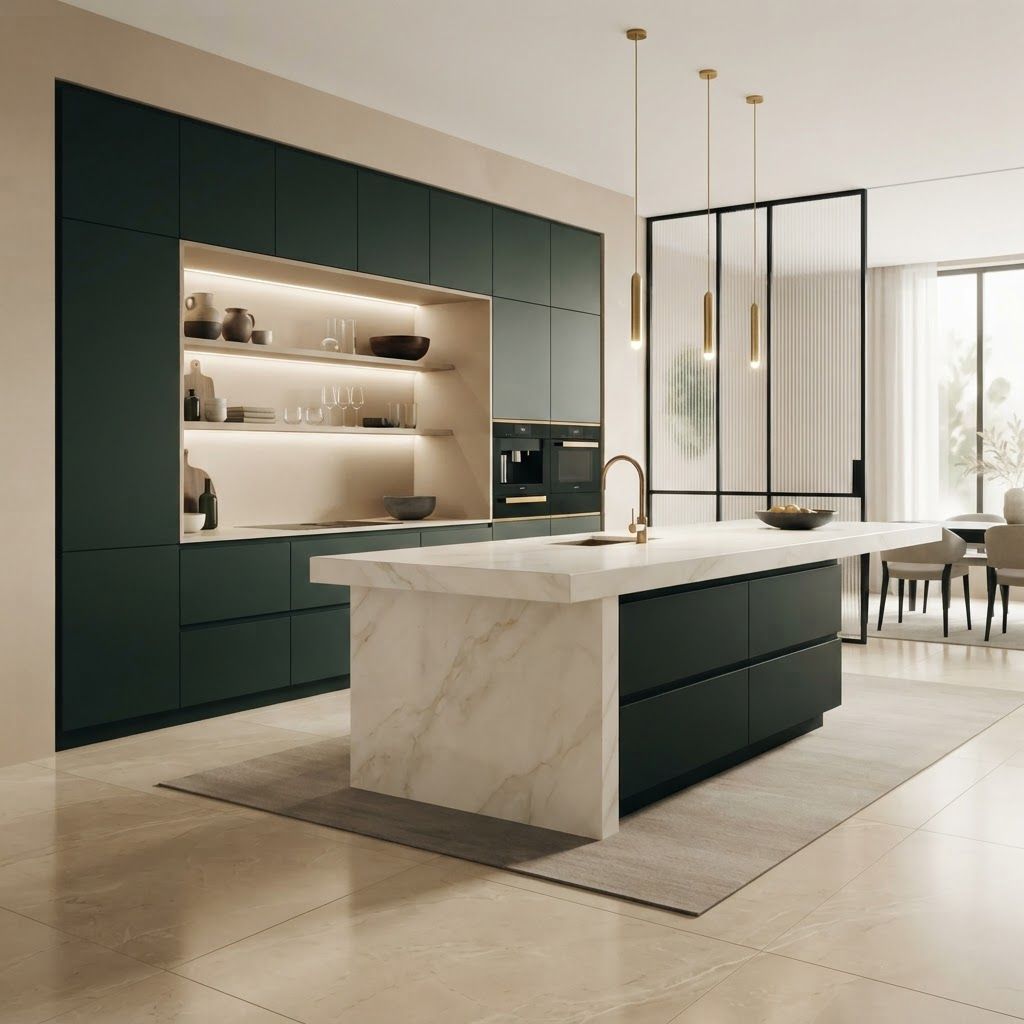
The strongest visual trend is simplification. Flat slab doors with push to open mechanisms or slim recessed channel handles create uninterrupted planes that make even a busy kitchen look calm. Tall units running to the ceiling remove the dust catching gap above and add serious storage. Matte finishes in warm off white, sand, deep green and charcoal have replaced high gloss, partly because they hide fingerprints and partly because they age better. Where colour is used, it usually sits on the lower cabinets and the island while upper joinery stays light, keeping the room from feeling top heavy.
Where space allows, the island now anchors the kitchen. It provides preparation surface, casual seating, storage and a natural gathering point for family. Practical sizing matters: allow a minimum of forty two inches of clearance around the island, and forty eight where two people work simultaneously or where a dishwasher and oven doors need to open. Seat overhang should be at least twelve inches for comfortable knee room. Decide early whether the island carries the hob, the sink or neither, because that decision drives extraction, plumbing and drainage routes that are expensive to change later. For heavy frying households, keeping the hob on the perimeter wall with a powerful wall extractor is often the wiser choice.
This is the single most important technical decision in a Pakistani kitchen and the most commonly underspecified. A decorative chimney hood that looks elegant in a showroom will not clear the smoke from a mustard oil tarka. Look for extraction rated to move the room air volume at least ten to twelve times per hour, ducted directly outside through the shortest possible run with minimal bends, rather than recirculating through a charcoal filter. Position the hood no more than twenty six to thirty inches above the hob and ensure it is wider than the cooking surface. Many families now also design a separate utility or secondary cooking area for the heaviest work, keeping the main show kitchen clean, which is an excellent solution where the plan allows it.
Worktops take the most punishment. Natural marble stains and etches from acidic and pigmented ingredients, so while it is stunning, it needs sealing and realistic expectations. Engineered quartz, sintered stone and large format porcelain deliver stone appearance with far better resistance to heat, staining and scratching, and they are increasingly available locally. Granite remains a durable and cost effective option widely fabricated across Pakistan. For splashbacks, a full height slab in the same material removes grout lines that trap oil and spice, which is a hygiene and cleaning win. Whatever you choose, insist on a proper template and dry fit, because a badly cut stone joint will annoy you every day.
Modern kitchen storage has moved from doors to drawers, and for good reason. Deep drawers with internal dividers let you see and reach everything without kneeling into a dark cupboard. Plan specifically for local realities: large degchi and pateeli pots, a pressure cooker, tall atta and rice containers, a masala organiser near the hob, chapati making equipment, and bulk grocery storage for monthly shopping. Pull out larders, corner carousels, integrated bins and a dedicated appliance garage for the toaster, blender and juicer keep the worktop clear. A rule that never fails: everything used daily should live within one step of where it is used.
Kitchens need both accurate light for chopping and softer light for eating and entertaining. Under cabinet strips are essential because a ceiling light behind you throws a shadow directly onto the cutting board. Add downlights positioned over the front edge of the worktop rather than centrally in the room, pendant lights over the island for warmth and scale, and interior lighting in glazed or open display units. Use a slightly cooler light in work zones and warmer light over seating, and dim everything so the kitchen can transition from six in the morning to a dinner party.
Integrated appliances keep elevations clean, but plan them for service access. Built in ovens at waist height save bending and are safer around children. A double bowl sink or a large single bowl with a drainer suits handwashing large pots. Provide far more sockets than you think you need, at least six on the worktop plus dedicated circuits for high draw appliances, and consider an inverter backed circuit for the refrigerator given local supply interruptions. Include a water filter point and, if your area has hard water, plan for treatment to protect fittings.
Choose flooring that tolerates oil, water and dropped pots. Large format porcelain in a matte finish with a slip resistant rating performs better than polished marble, which becomes dangerous when wet and dulls where you stand most. Keep grout lines dark and narrow. Detail the skirting so mopping does not damage cabinet ends, and use adjustable cabinet legs with a removable plinth so a plumbing leak does not mean dismantling the kitchen.
A modern Pakistani kitchen should look effortless and work relentlessly. That means clean handleless joinery over serious extraction, beautiful stone chosen for durability, drawers sized around your own pots, and lighting that serves both the knife and the conversation. Get those fundamentals right and the trends take care of themselves, because a kitchen planned around how your family really cooks will still feel current and comfortable a decade from now.

Written by the Living Solutions team
Strategy, design, and trade expertise, all under one roof.
Let's discuss how we can turn your vision into sustainable growth and measurable success.