
A closer look at how modern waste management infrastructure supports cleaner cities, stronger public health, and new investment opportunities across Pakistan. Learn what makes these systems work and how we help projects move from concept to completion.
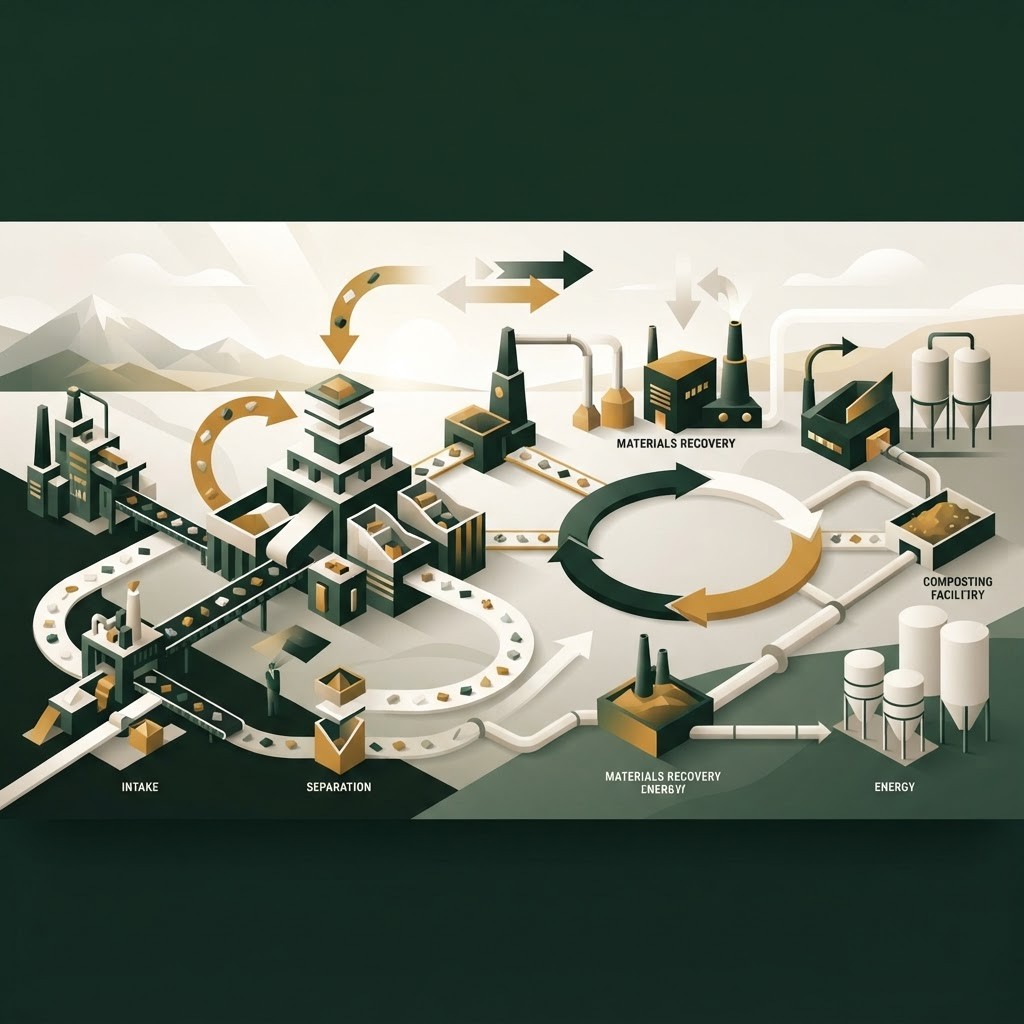
Waste management infrastructure has become one of the defining challenges of rapid urban growth in Pakistan. As cities expand and consumption rises, the volume of solid and liquid waste climbs every year, placing pressure on collection systems, transfer stations, landfills, and recycling facilities. Well planned infrastructure protects public health, safeguards groundwater, reduces air pollution, and turns a costly problem into a source of energy, jobs, and recovered materials. For municipalities and private investors alike, building reliable waste systems is no longer optional. It is central to livable, competitive cities.
Modern waste management is a full chain of interconnected assets. It begins at the point of generation with sorting and storage, moves through collection fleets and transfer points, and ends at treatment plants, recycling lines, composting yards, or engineered sanitary landfills. When any link is weak, the entire system suffers. Strong infrastructure planning aligns each stage so that material flows efficiently and environmental risk stays low.
At Living Solutions Global (livingsolutionsglobal.com) we help public bodies, developers, and industrial clients turn waste management ambitions into structured, fundable projects. As an Islamabad based consultancy focused on Pakistan, we bring feasibility analysis, financial modeling, and delivery oversight to complex environmental infrastructure. Our team connects technical requirements with commercial realities so that projects are viable from day one. Through our business advisory services we shape the strategy, and through disciplined project management we help keep timelines and budgets on track from planning to handover.
Effective waste systems rest on several building blocks. Collection networks must be routed for efficiency, with vehicles and containers sized to local density. Transfer stations consolidate loads and cut transport costs over long distances. Material recovery facilities separate recyclables such as plastics, metals, paper, and glass, feeding them back into the economy. Organic waste can be diverted to composting or anaerobic digestion, which produces biogas for power generation. Finally, engineered landfills with liners, leachate capture, and gas collection provide a safe destination for residual waste.
Each of these components carries its own engineering, land, and regulatory demands. Site selection alone requires careful study of geology, water tables, transport access, and community impact. Getting these decisions right early prevents expensive corrections later and builds public trust.
Pakistan generates tens of millions of tonnes of solid waste annually, and a large share is still handled informally. This gap represents a significant opening for private capital and public private partnerships. Waste to energy plants, recycling enterprises, and modern landfill operations can deliver steady returns while solving a pressing civic problem. Investors who move early can secure long term service contracts and establish a foothold in a market with strong structural demand. Those looking to invest in Pakistan will find that environmental infrastructure offers both social value and durable cash flows backed by essential public need.
Government initiatives and municipal reform programs continue to expand across major cities, and coordinated national planning is elevating the sector. As part of the broader push behind Pakistan infrastructure projects, waste systems are increasingly recognized as foundational assets rather than afterthoughts, opening the door to concessions, grants, and blended finance.
Digital tools are reshaping how waste systems operate. Route optimization software cuts fuel use and emissions. Sensors in bins signal when collection is needed, reducing wasted trips. Weighbridges and tracking platforms create transparent records that support billing, compliance, and performance monitoring. On the treatment side, automated sorting using optical and magnetic separation raises recovery rates and improves the quality of recycled output. These technologies lower operating costs and make projects more attractive to financiers who value predictable, measurable performance.
The benefits of strong waste infrastructure extend far beyond tidy streets. Proper leachate and gas control protects soil and aquifers. Recycling conserves raw materials and reduces the energy needed for new production. Composting returns nutrients to agriculture and cuts methane from open dumps. Waste to energy displaces fossil fuels while shrinking landfill volumes. Together these outcomes support climate goals and improve quality of life, especially in dense urban districts where poor waste handling has long harmed vulnerable communities.
Sustainable waste systems require more than concrete and machinery. They need clear governance, fair tariffs, skilled operators, and steady maintenance funding. Community engagement is equally vital, since household separation and responsible disposal habits determine how well any system performs. A project that ignores behavior change will struggle regardless of its technical quality. The most successful programs pair modern facilities with education, incentives, and consistent enforcement.
Financial sustainability also depends on realistic cost recovery. Blending user fees, municipal budgets, and revenue from recovered materials or energy creates resilience against funding shocks. Long horizon planning that anticipates population growth ensures capacity keeps pace with demand rather than lagging behind it.
Waste management infrastructure is a rare investment that improves public health, protects the environment, and generates returns at the same time. Whether you represent a city government exploring a public private partnership, a developer evaluating a recycling venture, or an investor seeking exposure to essential services, the sector rewards those who plan carefully and execute with discipline. We stand ready to guide you through feasibility, financing, and delivery so that your project achieves both impact and profitability. With the right partners and a clear roadmap, cleaner cities and stronger returns can go hand in hand.

Written by the Living Solutions team
Strategy, design, and trade expertise, all under one roof.
Let's discuss how we can turn your vision into sustainable growth and measurable success.