
Halal food exports require compliance with halal standards, food safety rules, and certification. Understand the laws governing halal food exports in Pakistan.
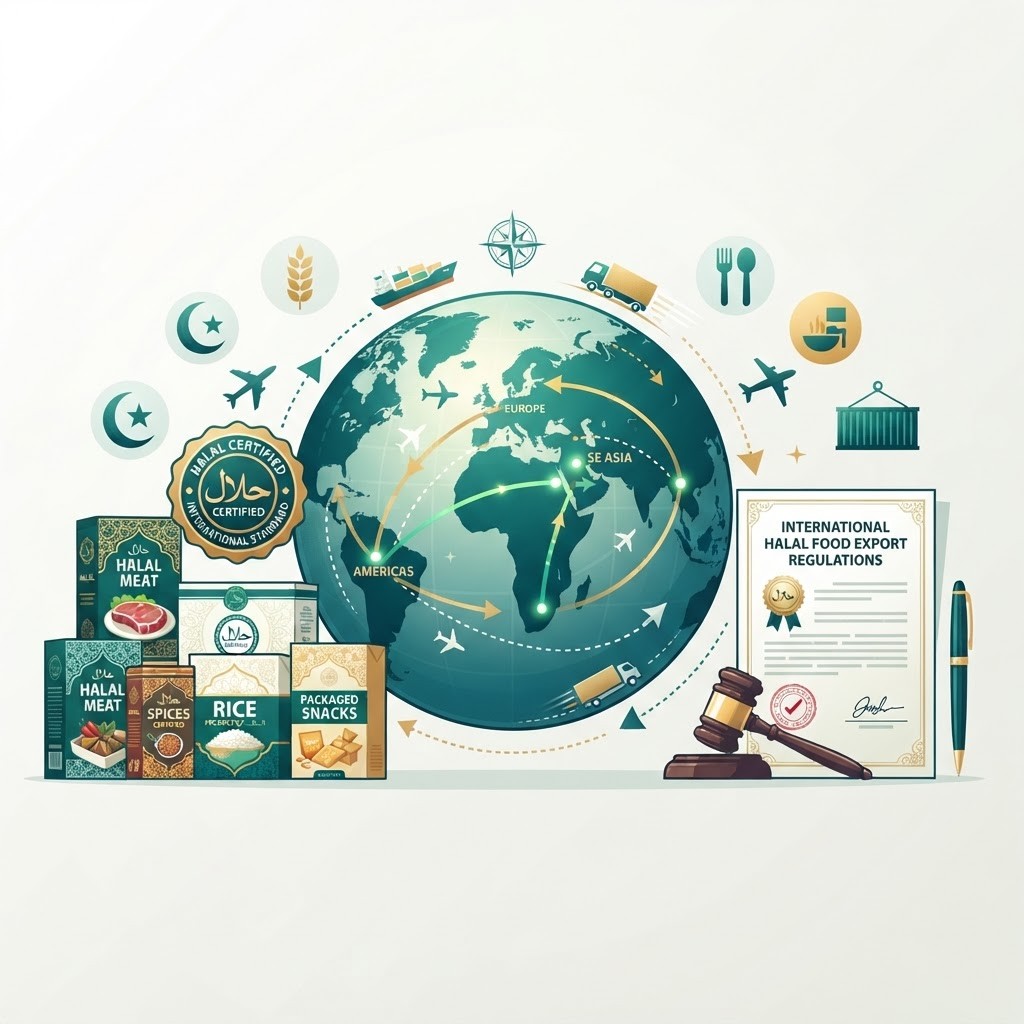
Halal food exports represent a major opportunity for Pakistan, as global demand for certified halal products continues to rise across the Middle East, Southeast Asia, Europe, and beyond. Halal food is produced and processed in accordance with Islamic principles, and exporting it requires compliance with a combination of halal standards, food safety regulations, and certification requirements. Understanding the laws and standards that govern halal food exports is essential for any business that wants to serve this large and growing market.
Because halal is both a religious and a commercial requirement, exporters must satisfy strict expectations around sourcing, processing, and certification. Buyers and regulators in destination countries demand credible proof that products are genuinely halal. Meeting these expectations opens access to a market worth vast sums globally, while failing to do so closes it entirely.
At Living Solutions Global, we help food businesses meet halal and export requirements through our export consultancy in Pakistan. As an Islamabad based consultancy, we guide exporters through certification, documentation, and market entry so they can serve halal markets with confidence. You can learn more about our trade services at Living Solutions Global, where we help exporters unlock the full potential of the global halal economy.
The foundation of halal food exports is halal certification. This certification confirms that products are prepared according to Islamic principles, covering the sourcing of ingredients, methods of slaughter for meat, and the avoidance of prohibited substances throughout processing. Recognised halal certification bodies audit and verify compliance, giving buyers confidence that products meet the required standards.
Certification is not a one time event. It requires ongoing compliance, regular audits, and careful control of the supply chain to prevent contamination with non halal materials. Exporters must maintain these standards consistently, because any lapse can undermine trust and jeopardise access to markets.
In addition to halal requirements, halal food exports must comply with the same food safety and quality laws that apply to all food exports. This includes hygiene standards, limits on contaminants, proper handling, and safe packaging. Halal status alone is not enough, products must also be safe and of high quality to satisfy regulators and consumers.
This dual requirement means that exporters must integrate halal compliance with robust food safety systems. Businesses that manage both effectively produce goods that are trusted on every level, which strengthens their reputation and expands their opportunities.
Halal food exports require careful documentation, including halal certificates, health and safety certificates, certificates of origin, and correct customs declarations. Accurate paperwork ensures that shipments move smoothly and satisfy the requirements of destination countries. Because many halal products are perishable, efficient handling of documentation is especially important to avoid costly delays.
Correct procedures also protect exporters from disputes and rejections. Our international trade in Pakistan support helps businesses prepare complete and accurate documentation so their halal exports reach buyers without complications.
Each destination country has its own rules for halal imports, and these can vary significantly. Some markets recognise specific certification bodies, while others impose additional registration or labelling requirements. Exporters must understand the expectations of each target market and ensure that their certification and documentation are accepted there. Careful research and preparation prevent surprises and build trust with buyers.
Meeting these requirements precisely allows exporters to access the most valuable halal markets. Countries with large Muslim populations and strong purchasing power offer significant opportunities for those who comply fully.
Beyond formal laws, success in halal exports depends on trust. Buyers and consumers must believe that products are genuinely halal, safe, and of high quality. Exporters who maintain transparency, uphold rigorous standards, and communicate their certifications clearly build strong reputations that lead to repeat orders and lasting partnerships.
The global halal food market is vast and growing, driven by rising Muslim populations, increasing incomes, and growing demand for certified products even among non Muslim consumers who associate halal with quality and hygiene. This expanding demand spans meat and poultry, processed foods, snacks, beverages, and ingredients, offering Pakistani exporters a wide range of opportunities to explore.
Pakistan is well positioned to serve this market. As a country with deep expertise in halal production and strong agricultural and food processing sectors, it can supply products that meet both religious and quality expectations. Exporters who invest in certification, quality, and market knowledge can capture a meaningful share of this global opportunity. By treating halal not merely as a compliance requirement but as a genuine mark of trust and excellence, Pakistani businesses can build enduring success in markets around the world.
Halal food exports in Pakistan are governed by halal certification standards, food safety and quality laws, careful documentation, and the specific requirements of destination markets. Exporters who meet these standards gain access to a vast and growing global halal economy. If you want to export halal food successfully and build trusted international relationships, our team is ready to guide you every step of the way.

Written by the Living Solutions team
Strategy, design, and trade expertise, all under one roof.
Let's discuss how we can turn your vision into sustainable growth and measurable success.